

A breakdown is a situation, not a service category
A car that has stopped in Dubai does not arrive with a neat label saying whether it needs a battery boost, tyre assistance, roadside help, or a flatbed. The first useful step is to describe what happened and where the vehicle is. Is it stopped beside a road, parked in a basement, or waiting at a home or workshop? Can it move safely? Are the keys available? Those answers are more useful to a recovery team than a guess about the fault. DubaiCarRecovery.site gives you several ways to begin that conversation: a direct call, WhatsApp, or a booking enquiry that prepares the details for you to review before sending.
This guide is for planning a car recovery enquiry, not diagnosing a vehicle or replacing advice from authorities at an unsafe scene. If people are at risk, contact the appropriate emergency service and follow its instructions. The collection method, timing, service availability, and quote must be confirmed for your particular request. A useful website should make that distinction clear. Ours is designed around a conversation that moves from your actual vehicle and pickup position to a workable plan, rather than treating every breakdown as the same job.
First, make the situation safe
If the vehicle is on or near moving traffic, put personal safety ahead of arranging transport. Do not stand in an exposed lane to photograph the car or inspect a wheel. Move only where it is safe and permitted, and follow the instructions of police, road operators, property staff, or emergency responders who are managing the scene. A commercial recovery enquiry does not replace emergency assistance. Once the immediate risk is addressed, you can give the recovery team an accurate pickup description.
A stationary car in a secure parking bay presents a different access problem from one at a roadside shoulder. The first may require a parking level, gate access, and height information; the second may require direction of travel and a precise landmark. If another person is arranging the job, make sure they identify the vehicle's location rather than sending their own phone location. Clear information can save a round of calls and help the team decide whether a proposed collection is suitable.
Write down what the vehicle is doing
You do not have to be a mechanic to make a useful breakdown enquiry. Say whether the engine will not start, the vehicle stopped while driving, there is visible damage, or a warning appeared. Mention a flat tyre, smoke, leaking fluid, an unusual noise, or a wheel that cannot turn if you can observe it safely. Do not invent a diagnosis. “The car is in a basement bay, will not start, and the parking brake may be engaged” gives a provider more to work with than “send a truck.”
The make and model can matter because ground clearance, weight, drivetrain, and access arrangements differ. Tell the team if it is an electric vehicle, an all-wheel-drive model, a low sports car, or a commercial vehicle. If you have the manufacturer's transport instructions, offer them to the operator. No short online article can specify a safe loading method for every model and condition. The team must assess the particular vehicle before promising how it will be moved.
Pin the pickup carefully
Dubai addresses can point to large sites with several entrances. For an Al Quoz workshop, give the business name and unit or gate if known. For a Dubai Marina tower, say whether the vehicle is outside, in public parking, or on a basement level. At a roadside location, provide the direction of travel and a nearby landmark where safe. A Google Maps pin is helpful, but a pin alone may not tell a driver which side of a divided road or which entrance to use.
The enquiry form accepts a typed description or a location link. Device location is optional: you choose whether to request it and can check the pin before sharing. If you are booking for a family member or driver elsewhere, type the vehicle's position instead. It is worth asking the person at the pickup to confirm the entrance and any access conditions. This small check is often more useful than sending multiple nearby map results.
Choose between roadside assistance and transport
The services listed on our site include battery boost assistance, tyre assistance, and emergency fuel assistance. These are enquiry categories, not promises that a particular intervention will solve a fault. Describe the symptoms and ask the team whether on-site assistance is suitable. If the car may need a garage, provide a possible destination as well so transport can be discussed without restarting the conversation.
For a non-running vehicle, breakdown recovery or flatbed towing may be relevant. The best choice depends on the vehicle's condition and where equipment can reach it. A car in a confined space might need a different plan from the same model parked outdoors. Ask what information the provider needs before dispatch and whether anything about the pickup changes the equipment or price. A category on a screen is a starting point, not a confirmed collection method.
Battery trouble: describe, do not assume
A car that does not start may have a battery issue, but the symptom alone does not prove one. Tell the team what happened when you tried to start it and whether the vehicle has been standing for a long time. If there are warning signs, smoke, unusual heat, or damage, say so. Avoid trying repeated procedures from a video merely to turn the enquiry into a simpler “jump start” request. The response should be based on the real state of the vehicle.
The battery assistance page lets you explain the situation and arrange a discussion about suitability. If roadside help is not appropriate or does not resolve the issue, ask whether a vehicle transfer to a workshop can be arranged and what that would cost. This creates a clear decision path without promising that one visit will repair every no-start problem.
Tyre and wheel problems: access matters too
A tyre problem is not always a routine wheel change. The car may have no usable spare, a damaged wheel, restricted access around it, or another issue that makes movement unsuitable. Include those details in your tyre assistance enquiry. You do not need to test whether a visibly damaged wheel can roll just to make collection easier. Let the team assess the facts you can safely provide.
If the vehicle needs transport, tell the provider whether it can roll and steer, as far as you know, and whether it is parked against a wall or another car. An underground bay or a steep ramp changes the collection discussion. The quote should describe the scope actually agreed, including any special access or loading arrangements rather than assuming every flat tyre has the same solution.
Fuel requests: be precise about what you know
If you suspect a fuel problem, say what the dashboard shows and what happened before the vehicle stopped. A fuel indication is useful, but it is not a complete diagnosis. Tell the team the vehicle model and fuel type if you know them. Do not accept a delivery assumption that has not been checked against the vehicle and location. The emergency fuel assistance page is a route to ask about availability and suitability.
A vehicle that has stopped in an exposed place may require scene safety arrangements before a commercial service can help. If a fuel discussion leads instead to transport, give a possible receiving workshop and ask for a revised quote. Keeping the problem description factual helps the team explain which options it can confirm.
Accident recovery needs a different conversation
An accident-damaged car may have hidden wheel, steering, suspension, or fluid damage. Say clearly that there was a collision and describe visible issues without trying to declare the vehicle safe to drive or load. Follow any instructions from police, emergency responders, insurers, or the people responsible for the scene. Confirm who is allowed to authorise collection and where the vehicle may be taken. An enquiry through our accident recovery page is not a substitute for those approvals.
Tell the recovery team if the car is blocked by another vehicle, has a wheel at an unusual angle, or needs access through a controlled area. Confirm the receiving person at the destination. A workshop may be closed or require prior notice. This is where a clear handover plan matters: the pickup, authorisation, destination, and quote should refer to the same damaged vehicle and the same agreed job.
Basement and tower pickups
Parking structures introduce constraints that a service label cannot describe. Height limits, narrow turns, steep ramps, gates, and nearby parked cars can all affect collection. Give the parking level and entrance name. If a posted clearance height can be read safely, provide it; otherwise say you do not know. Ask property management whether a recovery vehicle can enter and whether there is a designated collection point.
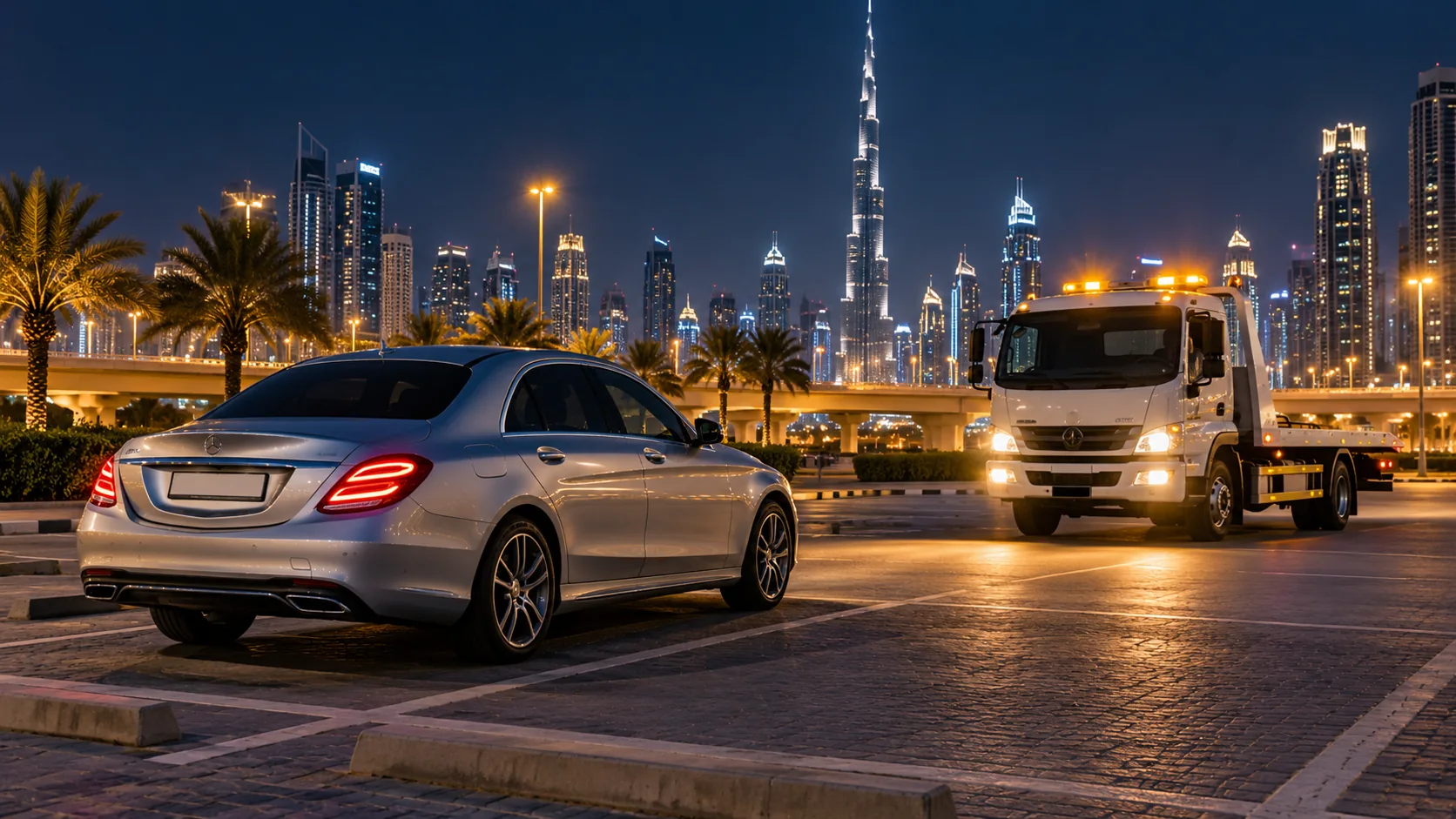
Do not assume that a photographed truck can reach every basement bay. The team needs to assess the access and may discuss a different collection method or pickup point. A customer who sends two useful photos of the entrance and vehicle position, when safe and allowed, can often start a more productive conversation than one who sends a long list of nearby roads. Our roadside assistance and recovery pages give you a place to explain these restrictions before anything is confirmed.
Plan the destination before agreeing dispatch
“Take it to a garage” leaves a significant part of the job undefined. Give the workshop name, address, contact person, and opening arrangements if known. If you prefer home delivery, confirm parking and a receiving person. A dealer or insurer may have its own receiving process. If you have not chosen a destination, tell the team at the start so it can explain what must be decided before collection.
The booking form lets you include a destination and timing preference, but submitting it does not reserve a truck or guarantee an appointment. The message opens in WhatsApp for you to review and send. The team then confirms availability, suitability, price, and dispatch. That sequence is one of the practical strengths of DubaiCarRecovery.site: it keeps the enquiry and the confirmed arrangement distinct, so customers can see what has actually been agreed.
Ask for a quote that describes the job
A complete car recovery quote should match the pickup, destination, vehicle, condition, and any access restriction you have described. Ask what is included if waiting, special equipment, a difficult loading position, or a change of destination may affect the price. A low number without a defined job is hard to compare. The team should be able to explain the quotation for your particular request before you accept it.
Do not treat a website's broad “from” price or an estimated arrival time as a guaranteed result for your location. Our site avoids publishing one universal price or a fixed dispatch promise because those details depend on the actual collection. You can contact us directly, explain the case, and ask for a current assessment. If you are comparing providers, send each the same information and compare their confirmed answers rather than their slogans. Our provider comparison explains that approach in more detail.
Keep a simple handover record
Once a collection has been agreed, confirm the destination, the receiving contact, and any access instructions. If it is safe and appropriate, note visible pre-existing damage and the items being handed over with the vehicle. Remove personal belongings that should not travel with it when you can do so without creating a safety problem or delaying necessary assistance. Keep the team informed if the vehicle or pickup contact changes.
A handover record does not have to be elaborate. Its purpose is to prevent two people from acting on different versions of the plan. For a company vehicle, make sure the person who approves the quote and the person who releases the vehicle both understand the arrangements. For a family member's vehicle, establish who can provide keys and who will receive the car at the other end.
A useful message to send
You can begin with a short, concrete description: “My car is a [make and model]. It is at [exact pickup and entrance]. It [will not start / has visible damage / has a tyre problem]. The keys are [available or not]. I would like it taken to [destination], and the receiving person is [name if known]. Can you confirm a suitable service, availability, timing estimate, and complete quote?” Add any parking limit, gate instruction, or condition that affects loading.
That message helps with car towing, flatbed transport, roadside enquiries, or an accident collection because it describes the job before guessing the solution. You can send it through DubaiCarRecovery.site’s enquiry form, call the team, or start a WhatsApp conversation. We aim to make the first step easy and the next step honest: your request begins a discussion, while the service details are confirmed by people assessing your circumstances.
Frequently asked questions about Dubai breakdown recovery
Does requesting recovery mean a truck is already dispatched?
No. The website prepares an enquiry. Sending a WhatsApp message or completing the form starts the discussion; the team confirms whether the request is suitable, available, priced, and dispatched. If you need urgent help, use the phone contact and explain the situation directly.
Can I request a flatbed for any car?
You can ask about flatbed towing, but the team must assess your vehicle and pickup access. A flatbed advertised online is not evidence that the right equipment can reach every position or that it is available at a particular time.
What if I do not know the cause of the breakdown?
That is normal. Describe what you observed and what you do not know. Mention the vehicle model, position, warning signs, and whether it can move. The team can ask follow-up questions without you inventing a diagnosis.
Can I choose where the car goes?
Tell the team your preferred garage, home, or other receiving location. The destination, access, timing, and quote need to be agreed before collection. If you have not chosen one yet, say so clearly.
Does the site cover all Dubai locations and every type of vehicle?
The site accepts enquiries across Dubai and lists several vehicle and roadside categories. Coverage and equipment suitability are confirmed for the exact location and vehicle. Al Quoz Industrial Area is the published local area; it is not a promise that every building, basement, or off-road position can be served without assessment.
A clear next step
A breakdown is stressful enough without an unclear booking process. Start by making the scene safe, identifying the vehicle's actual position and condition, and deciding where it should go. Then contact DubaiCarRecovery.site with the details. Our car recovery, towing, flatbed, accident, and roadside service pages help you choose a starting category, while the direct call, WhatsApp, and enquiry form let you explain the facts that a category cannot capture. We will discuss availability, suitability, timing, and a quote before treating the request as an arrangement.